
Content distribution represents the difference between content that drives revenue and content that dies in obscurity. According to BuzzSumo’s analysis of over 100 million articles, 50% of published content receives eight or fewer social shares, while the Content Marketing Institute states that 45% of B2B marketers cite distribution and scaling challenges as their barrier to content success. Your team creates valuable content, yet qualified leads remain flat.
- Why does your competitor’s average content outperform your best work in organic reach and demo bookings?
- How many qualified MQLs slip away because your distribution plan stops at hitting publish?
- What’s costing you more: creating new content or watching existing content fail to reach decision-makers?
These questions matter because B2B buying committees now consume 13+ pieces of content before requesting demos. Your content distribution channel strategy determines whether your content reaches buyers during their research phase or gets buried under competitor material. The companies winning pipeline through content treat distribution as a revenue system, not an afterthought.
Key Takeaways
- Most B2B content fails because teams treat distribution as promotion rather than building it as a revenue system connected to pipeline goals
- Content distribution requires three channel types working together: owned channels you control, earned channels others share, and paid channels that speed up reach
- Revenue-focused distribution strategies map content to specific buyer journey stages and track performance through CRM integration rather than vanity metrics
- Successful B2B distribution prioritizes channel selection based on where your ICP actually researches solutions, not where content is easiest to share
- Content repurposing multiplies distribution impact by turning one core asset into formats that work across different channels and buyer preferences
- Distribution measurement should track MQL generation and SQL conversion rates per channel instead of focusing solely on traffic and engagement numbers
What Is Content Distribution Channel Strategy?
Content distribution channel strategy is the plan for how, where, and when you share content to reach buyers and drive qualified pipeline. It defines which channels receive your content, how you adapt content for each channel, and how distribution connects to revenue goals.
B2B companies need distribution strategies because publishing alone doesn’t guarantee qualified buyers see your content.
This approach shifts content from a cost center to a revenue driver. At ThirdMeta, we build content distribution channel strategies that connect organic content to measurable pipeline outcomes.
Our systems track how distributed content moves buyers from awareness through demo booking.
Beyond Publishing: Distribution as a Revenue System
Distribution systems differ from content promotion in how they connect to business outcomes. Promotion focuses on getting views and clicks. Distribution systems track how content moves buyers through your funnel and contributes to pipeline velocity.
B2B content distribution requires mapping each piece to buyer journey stages. Your distribution channels should align with where prospects research during awareness, evaluation, and decision phases. This alignment helps content reach buyers when they need specific information.
Revenue-focused distribution also requires CRM integration to track which channels generate qualified leads. Your team needs visibility into which distribution channels drive MQLs that convert to SQLs. This data informs where to invest distribution resources.
The difference shows in results. Companies treating distribution as a system report higher content ROI than those using scattered promotional tactics. System-based distribution builds compound effects as content continues reaching new buyers over time.
The Three Types of Content Distribution Channels
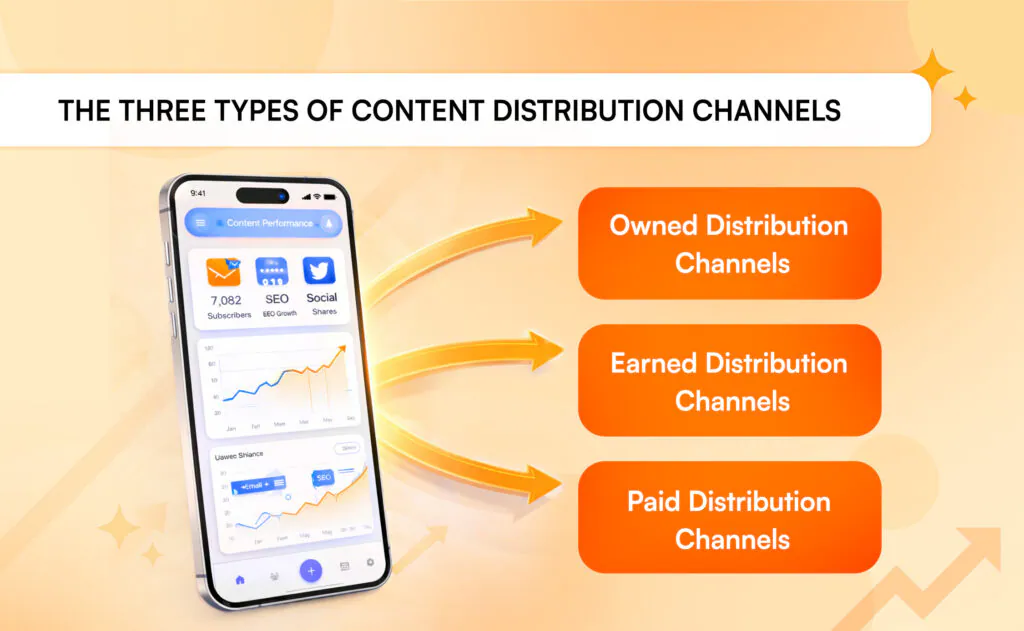
Content distribution operates through three channel types: owned, earned, and paid. Each type serves different purposes in reaching buyers and building pipeline. B2B companies need strategies across all three because relying on one channel limits reach and creates risk.
Your channel mix should reflect where your ICP researches solutions. Understanding how these channels work together helps prioritize distribution resources.
Owned Distribution Channels
Owned channels are platforms you control completely. Your website, blog, email list, and social media profiles fall here. These channels let you publish without gatekeepers limiting reach.
Email lists deliver the highest ROI among owned channels. HubSpot’s State of Marketing report shows email marketing returns $36 for every dollar spent. Subscribers already showed interest, making them more likely to convert.
Key owned channel benefits:
- Full control over content and timing
- Compound value as SEO content attracts traffic over time
- Direct access to engaged audiences
Learn more about building SEO strategies for B2B SaaS companies to maximize owned channel performance.
Earned Distribution Channels
Earned channels come from others choosing to share your content. Backlinks, press mentions, and organic social shares fall here. You can’t force earned distribution, but quality content increases likelihood.
Backlinks provide dual benefits. They drive referral traffic from relevant audiences while improving domain authority for SEO. High-quality backlinks signal credibility to search engines and buyers.
Primary earned channel types:
- Guest posts on industry blogs your ICP reads
- Media coverage and press mentions
- Organic social shares and word-of-mouth
- Backlinks from authoritative industry sites
Paid Distribution Channels
Paid channels give immediate reach through advertising spend. LinkedIn ads, Google Ads, and sponsored content put your material in front of specific audiences quickly. Paid distribution accelerates results while owned and earned channels build momentum.
LinkedIn advertising delivers strong B2B results. You can target by job title, company size, and industry. This precision reaches decision-makers matching your ICP.
Effective paid channel options:
- LinkedIn ads for targeting decision-makers
- Sponsored content on industry publications
- Google Ads for high-intent search terms
- Influencer partnerships in your niche
Most successful B2B companies use all three channel types. They adjust the mix based on goals and available resources. The key is connecting each channel type to specific pipeline outcomes.
Why Most B2B Content Distribution Fails
2B content distribution fails when companies separate it from revenue goals. Marketing teams publish content without clear plans for reaching buyers at different journey stages. This disconnect costs companies thousands in wasted content investment and missed pipeline opportunities.
Three specific failure patterns appear repeatedly across B2B companies struggling with content distribution:
| Failure Pattern | What Happens | The Real Cost |
| The “Publish and Hope” Approach | Teams create quality content, hit publish, and wait for organic discovery. No promotion plan exists beyond sharing once on social media. | When decision-makers research your solution category, they find competitor content instead. Your content library grows while the pipeline stays flat. Marketing can’t demonstrate content ROI because distribution never connected to lead generation. |
| Disconnected Channel Teams | Social media team runs separately from email marketing. SEO operates independently from paid campaigns. Each channel pursues different goals without unified strategy. | Fragmentation prevents multi-touch attribution. You can’t track how channels work together to move buyers through the funnel. Budget decisions happen without data on which channel combinations drive qualified pipeline. |
| Traffic-Focused Instead of Conversion-Focused | Distribution strategies optimize for pageviews and shares rather than lead quality. Teams celebrate traffic increases while MQL rates decline. | Your dashboard shows growing traffic, but sales teams complain about lead quality. Content distribution becomes a vanity exercise disconnected from business outcomes. |
These failures share a common root: treating distribution as separate from pipeline generation. Successful distribution requires connecting content, channels, and revenue metrics into one system. The next section shows how to build that system.
How to Build a Content Distribution Channel Strategy That Drives Pipeline
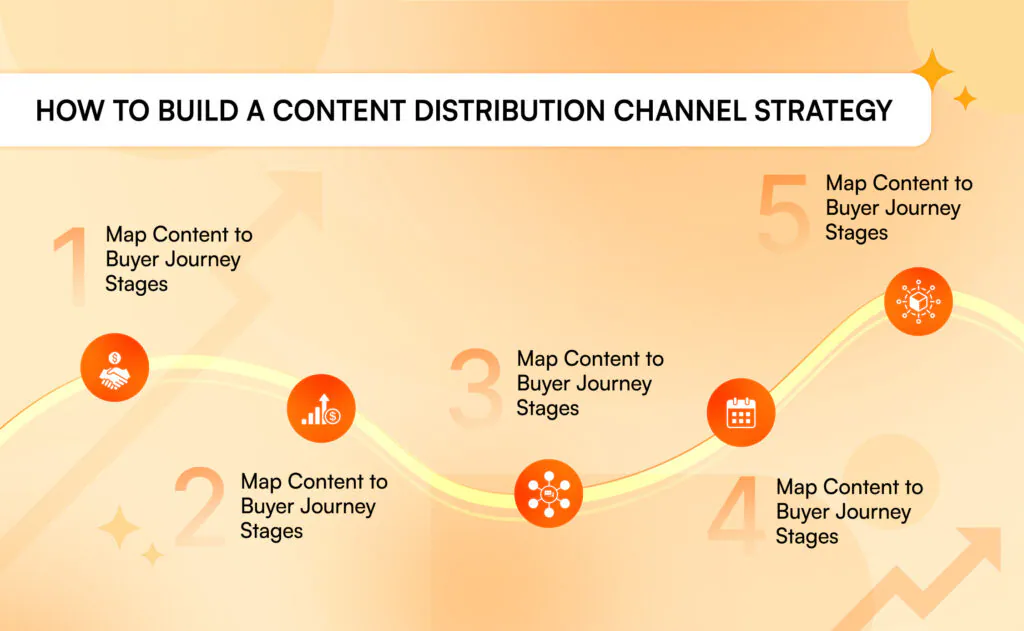
Building a content distribution channel strategy requires five connected steps that link content to revenue outcomes. Each step builds on the previous one to create a system that generates qualified pipeline.
The process starts with understanding your buyer journey and ends with CRM-connected measurement.
Step 1: Map Content to Buyer Journey Stages
Define what buyers need at awareness, consideration, and decision stages. Match distribution channels to each stage based on where buyers research.
The key components involved are:
- Awareness content addresses problems and educates through SEO and social media
- Consideration content compares approaches via email nurture and comparison pieces
- Decision content proves product fit through case studies and demo-focused materials
This mapping prevents wasting premium channels on wrong-stage content.
Step 2: Define Revenue Goals, Not Traffic Goals
Replace traffic targets with pipeline metrics. Set goals for MQLs generated per month, demo bookings from content, and SQL conversion rates by channel.
Work backward from revenue targets:
- Determine the number of customers needed monthly based on revenue goals
- Calculate demos required using your demo-to-customer conversion rate
- Identify content-sourced demos needed if content drives 30% of pipeline
- Set distribution intensity based on these numbers
Revenue goals also guide channel investment decisions toward high-quality MQL sources.
Step 3: Select Channels Based on Your ICP
Identify where your ideal customers actually research solutions through buyer surveys and CRM analysis.
B2B channel priorities typically include:
- LinkedIn for direct decision-maker access
- Industry-specific communities for niche audiences
- Email marketing for nurture and conversion
- SEO for long-term compound growth
Start with two or three high-potential channels before expanding distribution reach.
Step 4: Build a Distribution Calendar
Create a schedule defining when and how you’ll distribute each piece of content.
Your calendar should include:
- Content repurposing plan turning one blog into social posts, email segments, and video
- Consistent coverage across buyer journey stages
- Testing windows for new channels before major resource commitment
A single blog post should generate at least ten distribution assets.
Step 5: Connect Distribution to CRM Tracking
Set up attribution to track which channels generate MQLs and SQLs. Tag content URLs with UTM parameters and configure CRM to capture first-touch and multi-touch attribution data.
Monthly review process:
- Analyze channel performance against MQL and SQL targets
- Identify which channel combinations work best together
- Reveal content performance by topic and format
- Reallocate resources to highest-ROI channels
These five steps create a distribution system that compounds results over time. For companies needing help implementing these systems, explore our B2B SaaS content marketing services.
Content Distribution Tactics for B2B Companies
Four core tactics drive effective B2B content distribution. These tactics work across owned, earned, and paid channels to reach buyers and generate qualified pipeline.
- Email Distribution for Qualified Leads
Email remains the highest-converting owned channel for B2B content distribution. Segment your email list by buyer journey stage, company size, and engagement level. Send awareness content to new subscribers while promoting decision-stage content to engaged prospects.
Nurture sequences work better than one-off emails. Build automated flows that deliver relevant content based on subscriber behavior. When someone downloads a guide, follow with related content that moves them toward demo requests.
- LinkedIn Distribution for B2B Reach
LinkedIn provides direct access to decision-makers researching B2B solutions. Post native content rather than just sharing links to drive higher engagement. Employee advocacy programs multiply reach as team members share company content to their networks.
Paid LinkedIn campaigns should promote bottom-funnel content to narrowly targeted audiences. Use job title, seniority, and company size filters to reach active buyers. Track demo bookings rather than link clicks to measure campaign success.
- SEO as Long-Term Distribution
Organic search drives compounding returns as content ranks for buyer intent keywords. Optimize content for search terms prospects use during solution research. Focus on bottom and mid-funnel keywords that indicate active buying behavior. For detailed guidance on SEO tactics, see our complete AI SEO guide.
Create content clusters around topics where you want to rank. Link related pieces together to build topical authority. This structure helps search engines understand your expertise while making content easier for buyers to consume.
- Content Repurposing Across Channels
The key steps involved are:
- Start with comprehensive content like research reports or detailed guides
- Extract key insights and create short-form social posts for LinkedIn and Twitter
- Build email sequences highlighting different sections for various audience segments
- Record video content walking through main points for YouTube and LinkedIn
- Design infographics summarizing data and statistics for visual channels
One piece of content should generate at least ten distribution assets. This multiplication increases reach without proportional content creation costs. Track which formats perform best on each channel to refine your repurposing process.
According to Semrush’s Content Marketing Guide, repurposed content reaches 3x more people than original posts alone. This efficiency matters when teams face limited content creation resources but need consistent distribution volume.
Measuring Content Distribution Success
Distribution measurement should track full-funnel impact from traffic through revenue. Focus on metrics that connect distributed content to qualified pipeline rather than vanity numbers.
Beyond Vanity Metrics: Track Pipeline Impact
Content distribution measurement should follow the full funnel from traffic to revenue. Track how distributed content generates MQLs, converts to SQLs, and influences closed revenue. This full-funnel view reveals true distribution ROI.
Start with traffic quality metrics like time on page and scroll depth. Then measure conversion actions: email signups, content downloads, demo requests. Finally, connect these actions to pipeline stages in your CRM.
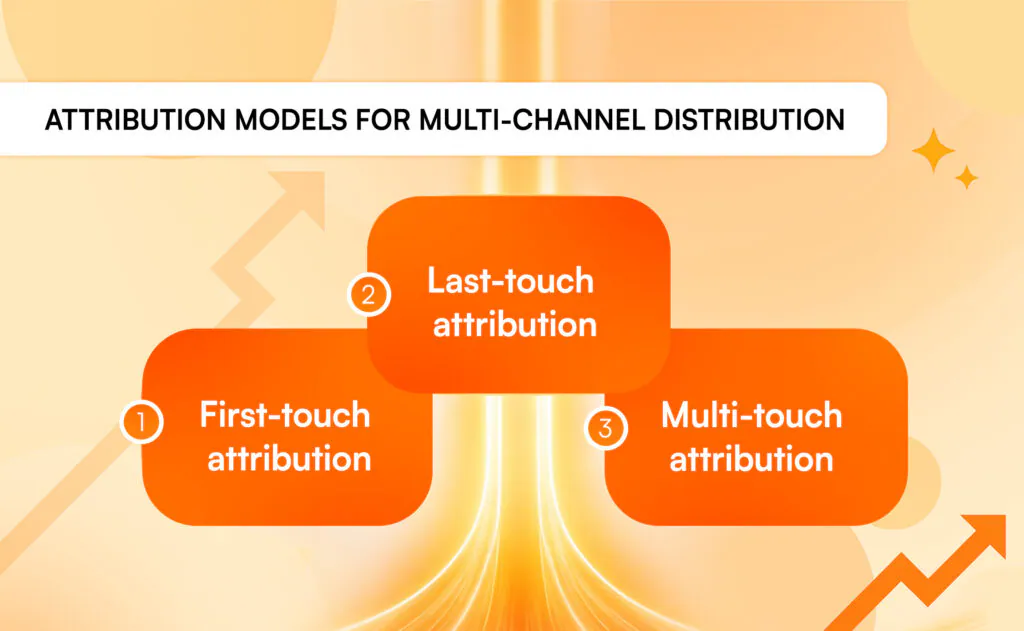
Multi-touch attribution shows how channels work together. First-touch attribution identifies awareness channels bringing new prospects. Last-touch shows channels closing deals. Multi-touch reveals the full path buyers take through distributed content.
Key Distribution Metrics by Channel Type
Each channel type requires different measurement approaches based on how they contribute to pipeline generation. Here’s what to track for owned, earned, and paid channels:
Owned Channel Metrics:
- Email open rates above 20% indicate good list health and subject line relevance
- Click-through rates above 3% show content resonates with subscribers
- Email-to-MQL conversion rates reveal how well content qualifies leads
Earned Channel Metrics:
- Backlink quality measured by domain authority of linking sites
- Referral traffic conversion rates show if earned sources send qualified visitors
- Share of voice in industry publications compared to competitors
Paid Channel Metrics:
- Cost per MQL shows efficiency of paid distribution spend
- Return on ad spend (ROAS) connects paid distribution to revenue
- Demo booking rate per dollar spent reveals bottom-line impact
Attribution Models for Multi-Channel Distribution
- First-touch attribution
It credits the channel that introduced prospects to your content. This model helps identify top-of-funnel awareness channels. Use first-touch data to invest in channels bringing new audiences.
- Last-touch attribution
It credits the channel where prospects converted. This shows which channels close deals. Sales teams often prefer last-touch because it highlights content directly influencing buying decisions.
- Multi-touch attribution
It distributes credit across all channels prospects engaged with. This model reveals how channels work together throughout buyer journeys. Multi-touch helps teams understand the compound effect of consistent multi-channel distribution.
Choose attribution models based on your sales cycle. Short cycles might work with last-touch. Long B2B sales cycles benefit from multi-touch to capture the full journey. Test different models to find what best informs your distribution decisions.
Why Should You Choose ThirdMeta?
B2B companies need distribution strategies that connect content to qualified pipeline. Your current approach might generate traffic without moving revenue metrics. ThirdMeta builds content distribution channel strategies that drive measurable MQL and SQL generation.
Distribution Systems That Drive Results:
- Pipeline-focused distribution mapping content to buyer journey stages
- CRM-connected attribution tracking which channels generate qualified leads
- Multi-channel coordination replacing disconnected promotional tactics
Proven Performance in B2B Content Distribution:
Lead Quality: Generate consistent qualified inbound leads monthly with high MQL rates
Conversion Focus: Build distribution systems that improve MQL-to-SQL conversion
Revenue Impact: Connect content distribution to actual pipeline and revenue growth
Your marketing needs execution that ties to sales outcomes. ThirdMeta specializes in B2B content systems that generate qualified pipeline. We connect distribution strategy to revenue metrics your executive team actually cares about.
Core Distribution Capabilities:
- Modern GEO and AI Overview optimization for search visibility
- Distribution strategies informed by actual sales conversations and buyer research
- 90-day implementation sprints with measurable pipeline KPIs
Smart B2B companies need distribution that compounds results. ThirdMeta helps you build content systems that drive predictable revenue growth.
Ready to build a content distribution channel strategy that drives qualified pipeline? Request a Strategy Call.
Conclusion
Content distribution channel strategy separates companies that generate pipeline from those wasting content investment. Your distribution approach should connect owned, earned, and paid channels to specific revenue outcomes rather than pursuing disconnected promotional tactics.
Frequently Asked Questions
Content distribution channel strategy is the plan for sharing content across owned, earned, and paid channels. It defines how you reach buyers at different journey stages. This strategy connects content to qualified pipeline generation rather than just traffic.

Sr. Content Writer
Vamshi Vadali is Third Meta's Content Team Head and the guy who banned fluff from all blog posts. He specializes in SEO, GEO (Generative Engine Optimization), and AEO (Answer Engine Optimization): the trifecta that gets B2B SaaS content ranking in both Google and ChatGPT. Vamshi doesn't write content. He engineers MQL machines. His philosophy? Good writing needs data and clarity, not buzzwords. He writes like a CFO reads: straight to the outcomes. When he's not optimizing for AI Overviews, he's debating whether LLMs prefer Oxford commas.